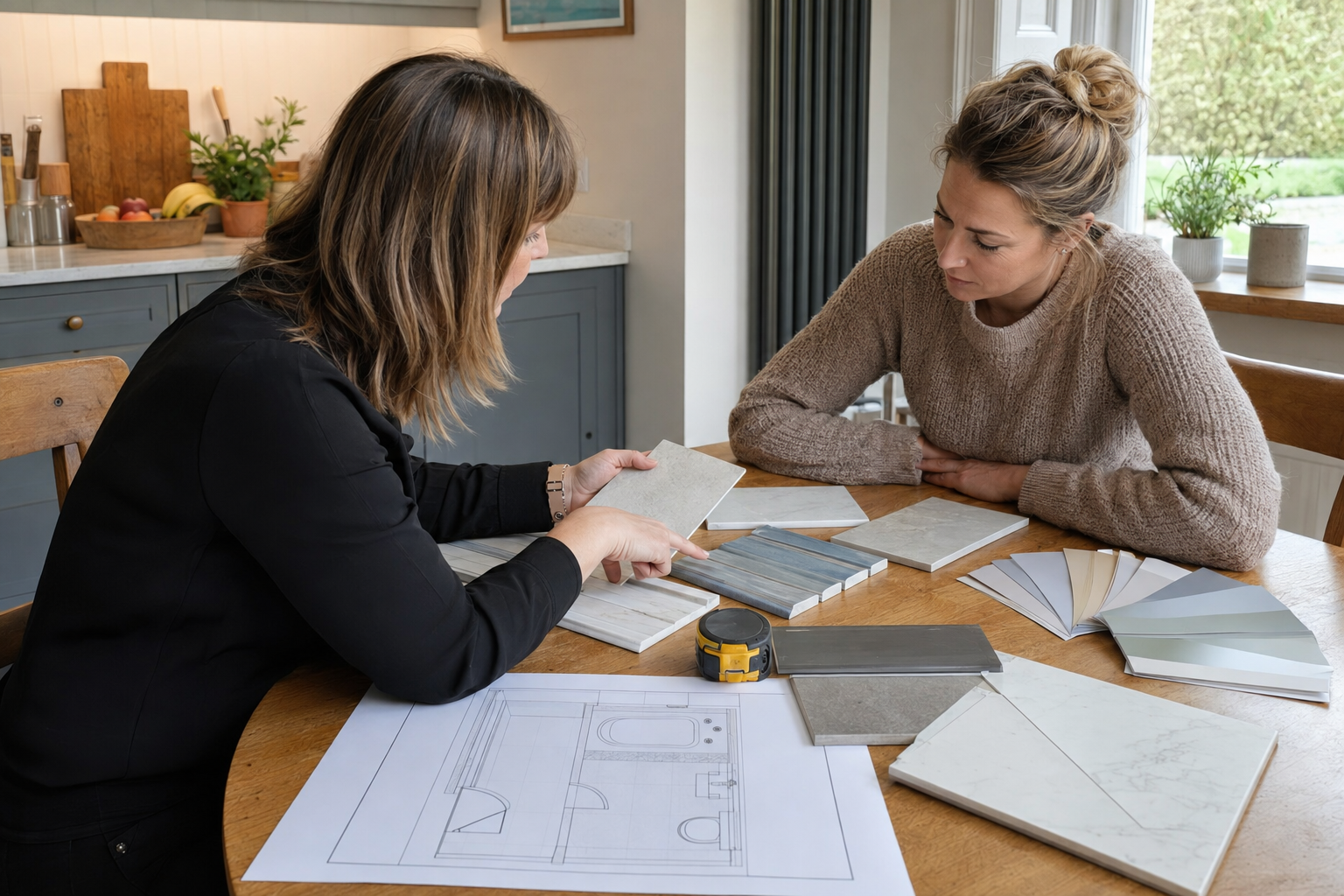
Set priorities before comparing product ranges
Write down the changes that matter most in the current bathroom. You may need a shower that is easier to enter, storage beside the basin or surfaces that are less awkward to clean. Put those needs ahead of optional decorative details. This makes it easier to compare products without letting every attractive item add another requirement to the room.
Share the budget you are working with during the home design discussion. Ask which choices affect the full installed cost and what each alternative changes. A useful comparison explains the difference in products, work and everyday use. It should not depend on choosing a cheaper-looking photograph or removing necessary preparation simply to make the headline total fit a figure that does not cover the agreed job.
Keep fitting positions that already work
Moving a toilet, basin or shower can mean extra work to water and drain connections, flooring or wall finishes. If the existing positions are comfortable, compare a refit that keeps them with one that changes the layout. New furniture, storage or a different screen may improve the room without moving every pipe. The installer still needs to check the condition of what is staying.
Do not keep an awkward arrangement only because changing it appears expensive. Ask what the move would actually involve and which alternative solves the same problem. A measured plan can help separate a useful change from one made mainly for appearance. Any saving depends on the actual room and products, so avoid assuming that keeping a layout always reduces the price by a particular amount.
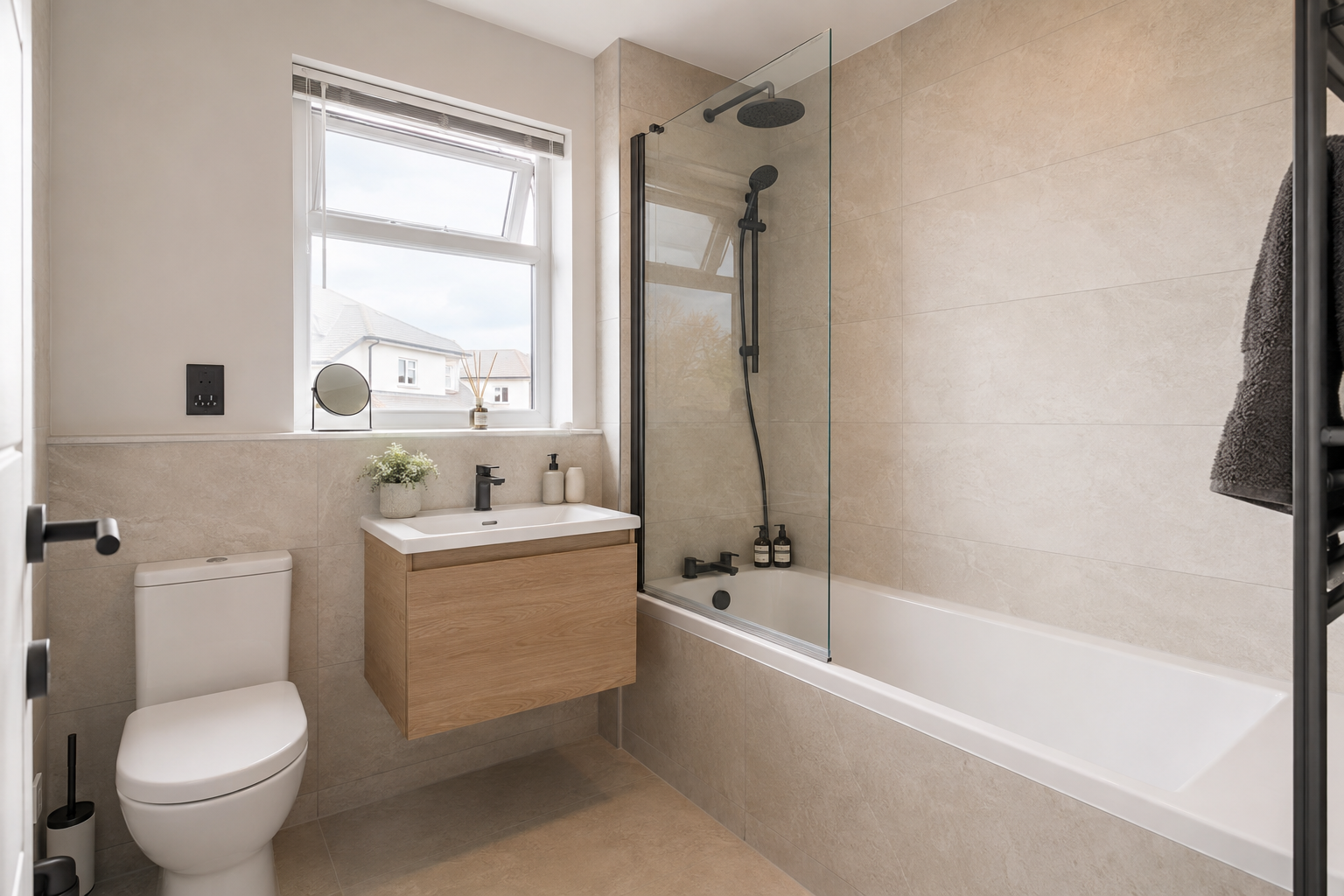
Choose compatible products at the right sizes
Confirm the bath or tray, screen, basin furniture and taps before the fitting plan is finalised. Check dimensions and connections together. A shower system must suit the home's water supply, and wall-hung furniture needs appropriate support. Products bought separately may need additional parts or work before they can function together, even when their finishes appear to match. Confirm who supplies each product and who handles damaged or missing deliveries.
Compare usable storage and controls rather than choosing only on a product's outside appearance. A less expensive cabinet is not a useful saving if it leaves you needing another unit for everyday toiletries. Similarly, the smallest basin may be uncomfortable with the chosen tap. Look at the installed room and how you will use it, with all required components included in the quotation.
Choose Finishes With Their Fitting Cost Included
A smaller selection of coordinated wall, floor and furniture finishes can make ordering and decisions more straightforward. View samples together and agree the areas each product will cover. Different panel or tile arrangements require different cuts, joints and finishing. Ask about the complete fitting cost before assuming that a material's lower purchase price means the finished wall will cost less.
Keep necessary preparation, waterproofing and repairs in the job. Covering damaged or unsuitable surfaces is not a sensible way to reduce the budget. If the wall or floor condition changes the work required, ask for the problem and repair to be explained. Compare alternatives that still meet the needs of the installation, rather than treating the unseen parts as optional because they will not appear in the finished photographs.
Decide accessories and electrical items early
Mirrors, towel rails, lighting, ventilation and shower shelves can affect wiring, supports and wall details. Agree the items you know you need before surfaces are finished. A shelf built into the shower wall, for example, depends on suitable construction and waterproofing. Adding it late may involve more work than planning it with the wall from the beginning.
A qualified electrician should advise on bathroom electrical products and installation. Do not leave a powered mirror or extra light out of the discussion and assume it can be added without changing the work. Keep controls, storage and towel positions on the room plan too. Early decisions help avoid paying for a finished area to be altered because an everyday need was overlooked.
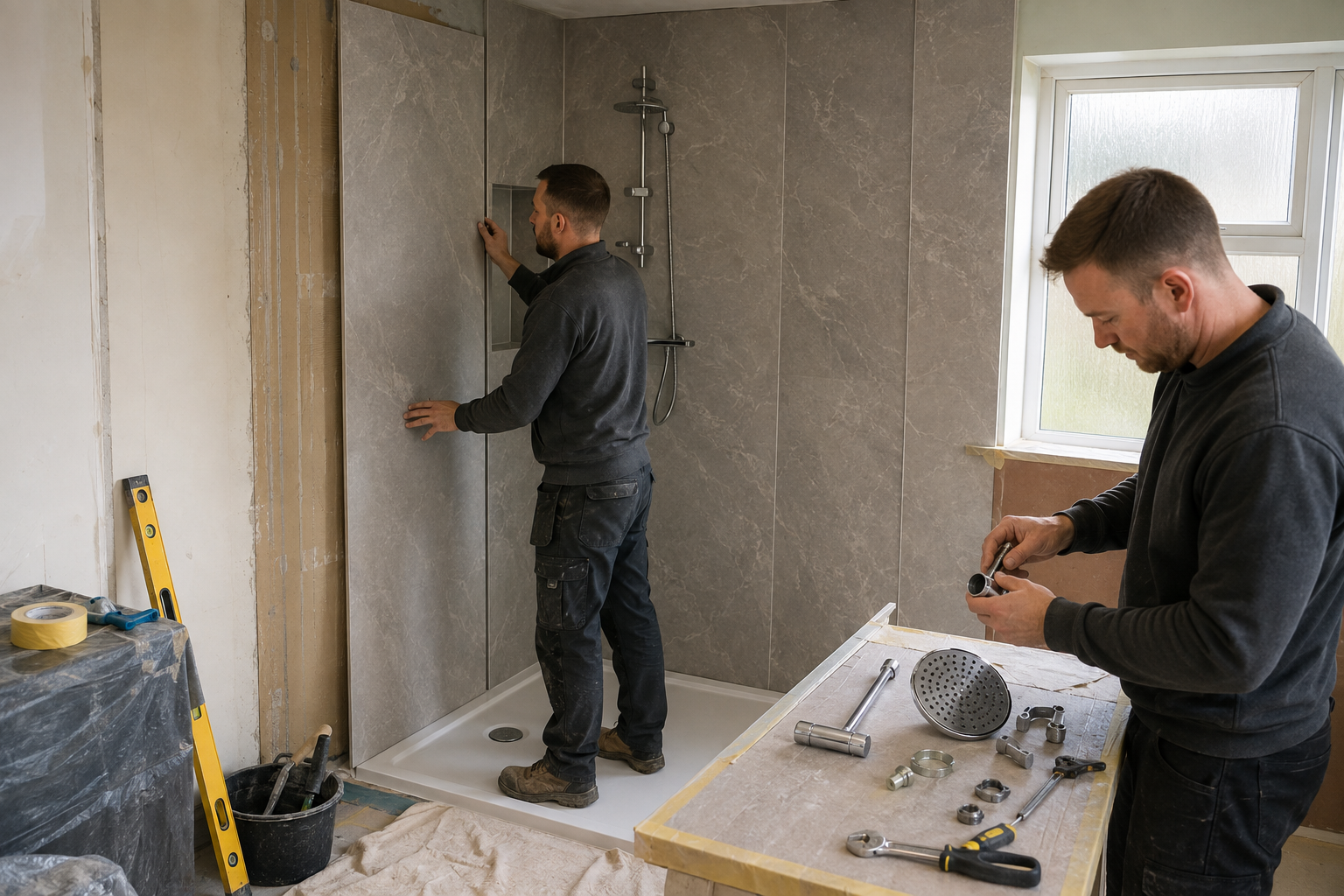
Keep the written agreement up to date
Read the quote for products, preparation, installation, waste removal and finishing. Check exclusions, payment terms and the expected schedule directly with the business. If two prices include different work, compare those differences before choosing. Fitted Bathrooms Livingston's £4,500 starting price is not a fixed quote for every room; the actual products and installation still need to be agreed.
Record approved changes and their effect on price before extra work goes ahead. Ask how hidden damage found during removal will be shown and discussed. Keep the product list and care instructions after handover. Controlling a renovation budget means making clear choices and understanding the complete job, while preserving the work needed for the bathroom to be properly fitted and practical to use.
Read about bathroom cost guide for the fitting service. For more help with planning, see where the bathroom budget goes and fully fitted bathroom inclusions.