Ask for a schedule based on your actual room
There is no single installation time that fits every bathroom. Replacing products in their existing positions can involve different work from moving a toilet, changing the shower height or repairing damaged walls. Ask for a schedule based on the measured room and the products you have chosen. A general estimate from a photograph should not be treated as a confirmed completion date.
The quote and timetable should describe the same job. Check whether removal, preparation, plumbing, electrical work, wall finishes, flooring and decorating are included. If one stage is being handled separately, agree how it fits around the others. Knowing who is responsible for each part makes the schedule easier to understand and helps avoid assuming that work has been allowed for when it has not.
Settle the product choices before the start date
The bath or tray, screen, basin furniture and controls affect both the layout and the fitting work. Confirm the actual models, measurements and connections before installation begins. A product described as a similar replacement may have different fixing points or opening movement. Late changes can require work to be reconsidered, particularly once new pipes or wall finishes are in place.
Ask how delivery and storage will be arranged and who checks items when they arrive. A damaged or missing part can interrupt the planned sequence. Keep the product list with the quote and record any agreed substitute. It is easier to check a replacement against the room drawing before it is fitted than to discover afterwards that a drawer catches the shower screen or a connection is different.

Allow for removal and checking the hidden surfaces
Taking out the old suite and finishes exposes parts of the room that were previously covered. The walls, floor and existing connections need checking before new products go in. The amount of preparation depends on what is found and the requirements of the chosen installation. New tiles or panels should not be used to hide an unresolved leak, loose surface or damaged area.
Agree beforehand how unexpected repairs will be explained, priced and approved. Ask how they could affect the timetable and what will happen while a decision is made. This does not mean every bathroom will reveal a major problem, but it gives both sides a clear way to handle one. Keep photographs and written descriptions of additional work with the project information so changes can be understood later.
Understand the order of the fitting work
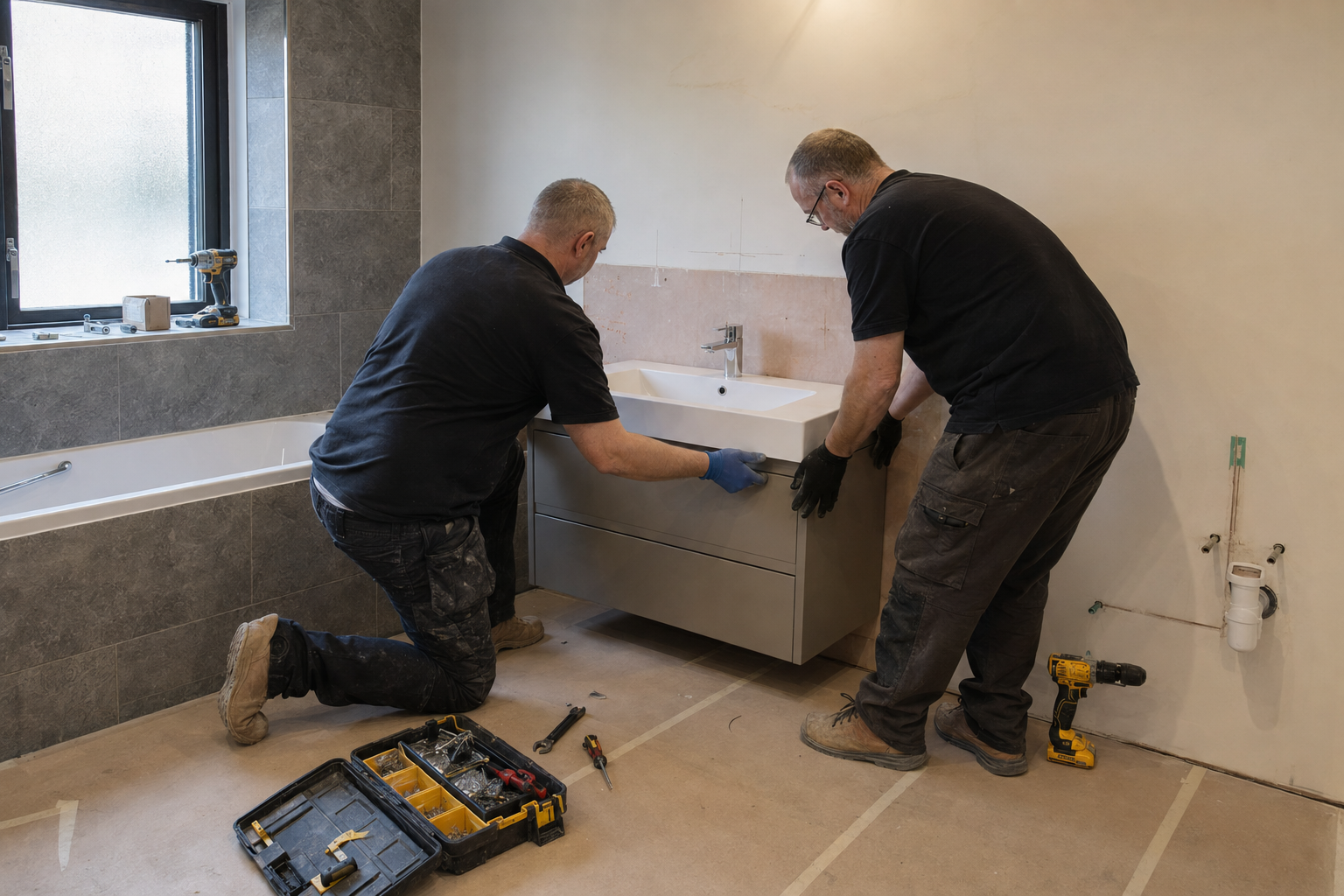
The installation needs a sensible sequence for connections, preparation, surfaces and fittings. Plumbing and electrical work may need to happen before parts are concealed, while final connections and checks happen later. Ask the fitter to explain the stages for your room in ordinary terms. You do not need to manage the trades yourself to understand why one task must be completed before another begins.
Some materials and seals need time before they can be covered, loaded or used. The correct timing depends on the products and conditions, so follow the installer and manufacturer's instructions. A surface that looks finished is not necessarily ready for an immediate shower. Ask when the bath, shower, floor and furniture can be used normally rather than relying on the appearance of the room at the end of a working day.
Plan the periods without water or washing facilities
Before the work starts, ask when the water supply will be interrupted and which fittings will be unavailable. This is especially important if the property has only one toilet or bathroom. Agree what the household needs to arrange during those periods. Do not assume that a fitting can be reconnected every evening or that there will be a temporary washing arrangement unless it has been confirmed.
Discuss access through the home, protection for floors and stairs, delivery space and removal of old fittings. Keep children, pets and visitors away from the working area as agreed with the installer. Clear arrangements help the work proceed, but they should fit the actual property and household. Raise any restrictions on access or working times before the start date, rather than when the fitter arrives with materials.

Confirm handover and what happens if the plan changes
Ask how progress and changes to the expected finish date will be communicated. A useful update explains the reason, the work still needed and the revised arrangement for using the room. Keep approved changes in writing. If a delay occurs, check the practical effect on the household rather than relying on a general reassurance that everything will be sorted soon.
At handover, compare the finished bathroom with the product list and quote. Ask about operating controls, cleaning, repair access and when finishes are ready for use. Keep the care information and any agreed aftercare details. The renovation schedule is complete when you understand the remaining instructions and the room is ready for its intended use, not simply when the last visible fitting has been put in place.
Read about bathroom installation for the fitting service. For more help with planning, see what a fully fitted bathroom includes and controlling renovation costs.