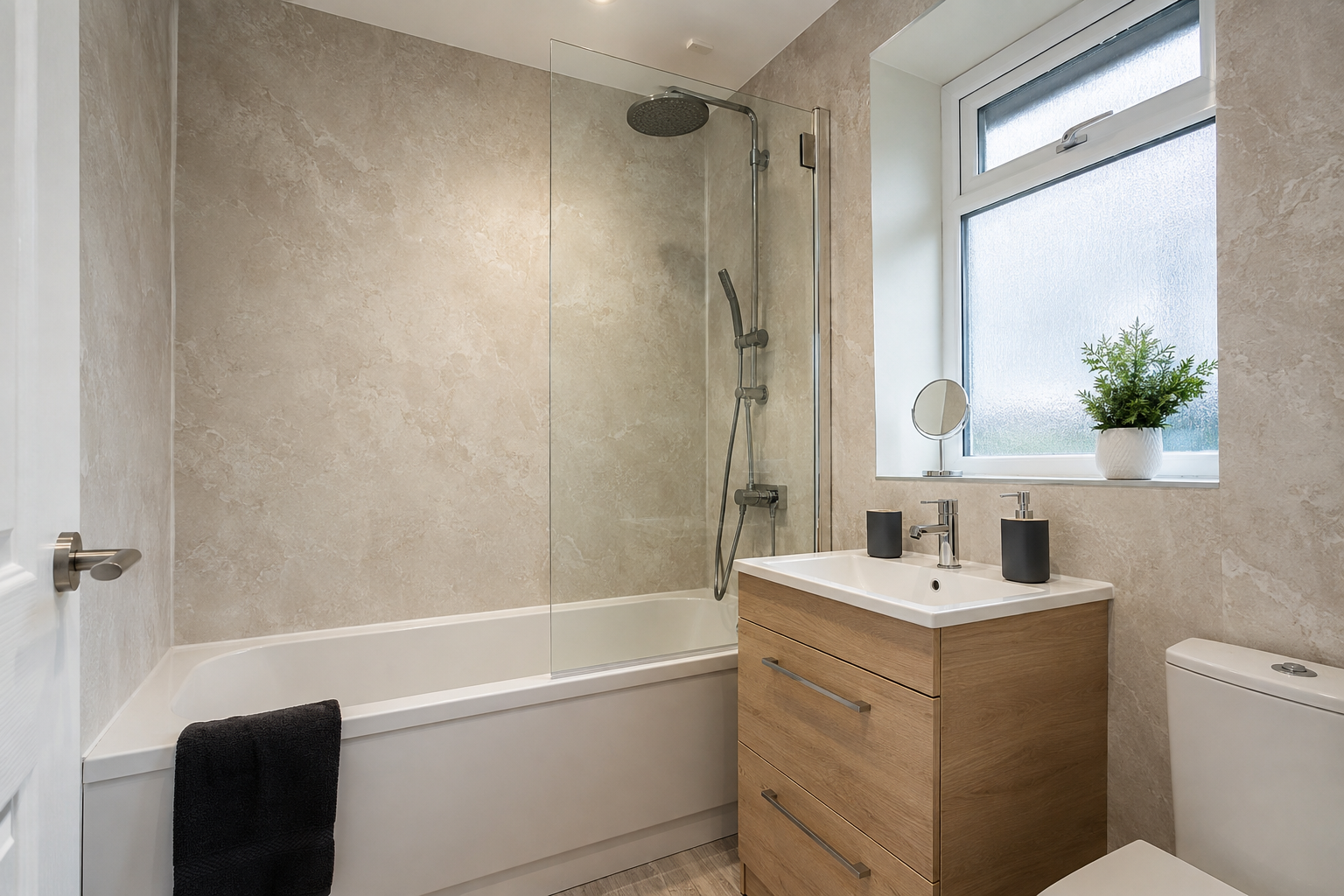
Check How Panels or Tiles Will Fit Your Walls
A sample helps you choose colour and surface, but it does not show the whole installation. Tiles create a pattern of grout joints that changes with their size and layout. Panels have their own sheet sizes, joints and trims. Ask to see how the chosen system will look around the bath or shower, not just how one piece looks beside a tap sample.
Think about the positions of windows, corners, shelves and fittings. Those details determine where cuts and joints appear. A pattern that looks straightforward on a broad wall can need more planning around a small window or recessed shelf. Compare a proposed wall layout with the room measurements so you understand the result before choosing solely on the appearance of a showroom display.
Check where each product is intended to be used
Bathroom walls receive different amounts of water. A shower wall needs a suitable installation for regular direct exposure, while another wall may remain much drier. Check the exact tile or panel system and the manufacturer's instructions for its intended location. A product that looks like stone or marble does not tell you how it should be fitted or maintained.
Do not assume every panel range has the same material, joint system or requirements. Likewise, tiles differ in their specifications and preparation needs. Ask the fitter to confirm that the chosen products work together, including the base, adhesive, joints and finishing details. The visible surface is one part of the wall system rather than the complete explanation of how water will be managed around the bath or shower.
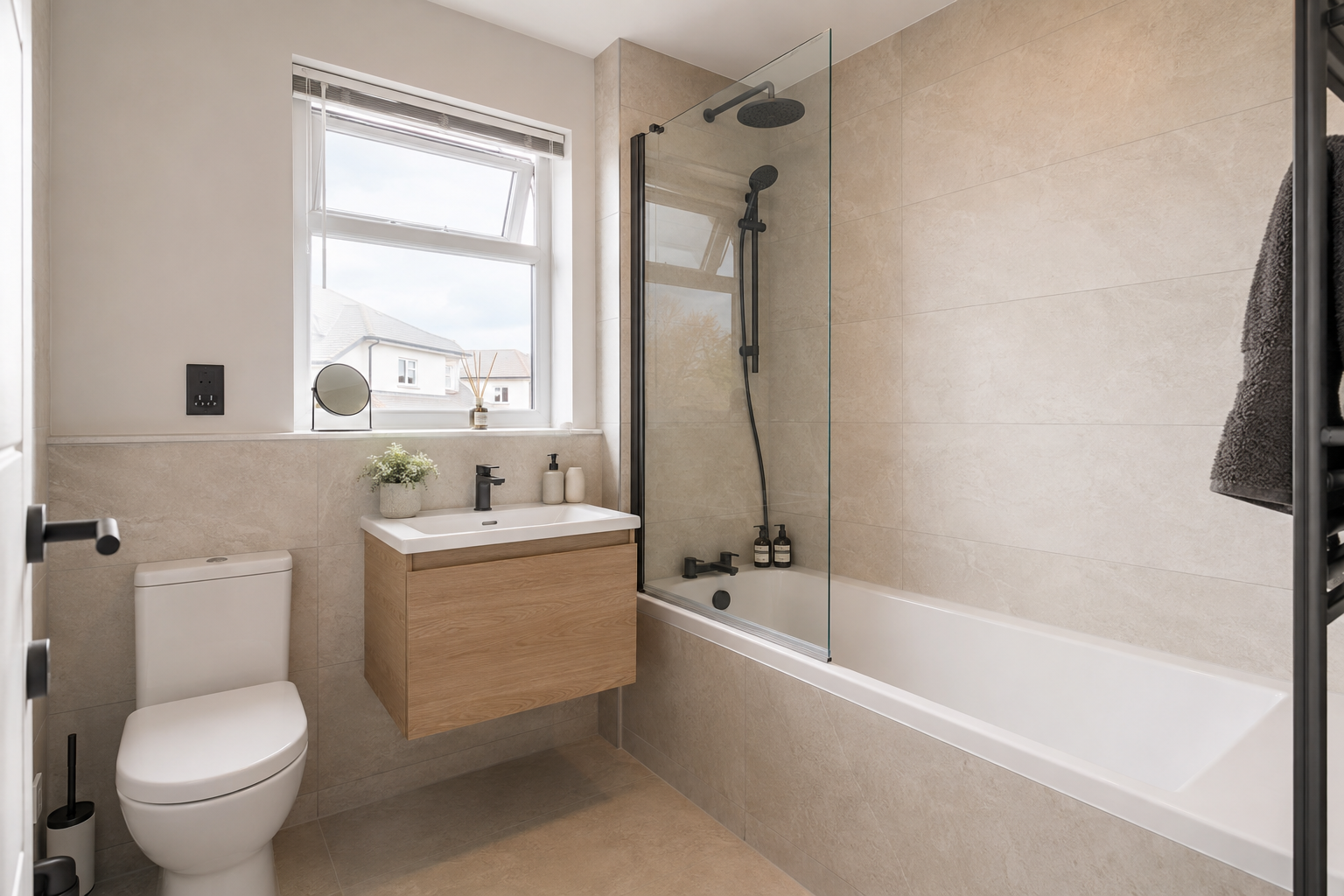
Have the wall condition checked before fitting
Loose surfaces, damp damage or leaks need attention before new finishes cover them. Removing the old bathroom may reveal work that could not be seen earlier. Ask what preparation is already included and how additional repair will be explained and priced. Covering a damaged area quickly is not a substitute for understanding why it has deteriorated and preparing it appropriately.
Some panel products can be fitted over existing tiles under suitable conditions, but this depends on the manufacturer's instructions and the wall beneath. It should not be assumed for every room or range. The installer needs to check whether the surface is sound and appropriate. Ask how this choice affects finished dimensions around the tray, screen, windows and other fittings before deciding that it is the simpler route.
Compare Cleaning and Care for Panels and Tiles
Panels can reduce the number of grout lines compared with many tiled layouts. Their joints, trims and seals still need care, so grout-free should not be read as maintenance-free. Keep the instructions for the exact panel range and use the recommended cleaning method. A strong cleaner that works on another bathroom surface may be unsuitable for the panel or fittings beside it.
For tiles, look at the surface and grout together. A textured tile or particular grout finish can have different cleaning needs from a smooth sample. Check access around the screen, bath edge and furniture too. The ease of cleaning depends on the layout as well as the material; a narrow gap that cannot be reached remains awkward whatever finish is fitted behind it.
Ask what repair and replacement would involve
A damaged tile, panel, joint or seal can require different work. Ask how a problem would be investigated and whether the affected part can be replaced without unnecessary disturbance. Keep the brand, range and product details after fitting. A later replacement may not match an old batch exactly, so retaining useful product information makes the options easier to discuss.
Think about access to plumbing behind the finished wall. Valves, shower components and other parts that may need maintenance should have a planned way to be reached. A tidy surface should not conceal everything so completely that an ordinary repair requires extensive damage. Agree those access details while the wall layout is being designed, rather than discovering the limitation when a fitting eventually needs attention.
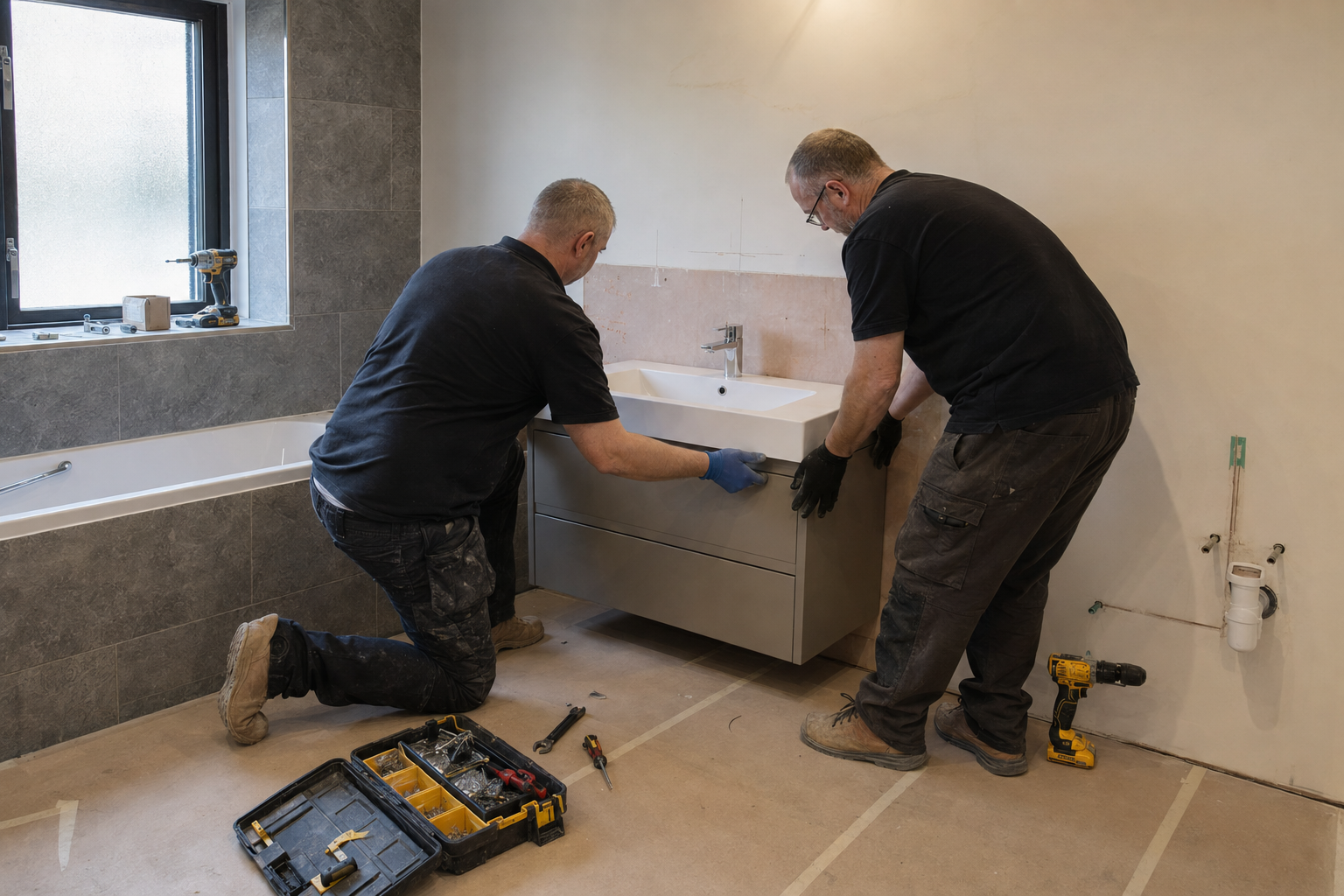
Read the complete fitted quote before choosing
Compare the same wall coverage and level of finishing in each option. Include removal, preparation, materials, joints, trims and fitting around windows and shelves. A lower product price does not necessarily mean a lower total installation cost. Ask what is excluded and which surrounding areas will be repaired or decorated so the room is finished as you expect.
View the final samples with the floor, furniture and lighting before ordering. Record the exact products and chosen colours in the quote, and check any substitute against the other finishes. Both panels and tiles can be practical choices when their installation and care suit the room. The decision should be based on the complete wall you will use and maintain, with the fitting work understood alongside its appearance.
Read about bathroom wall panel fitting for the fitting service. For more help with planning, see choosing bathroom flooring and caring for a newly fitted bathroom.