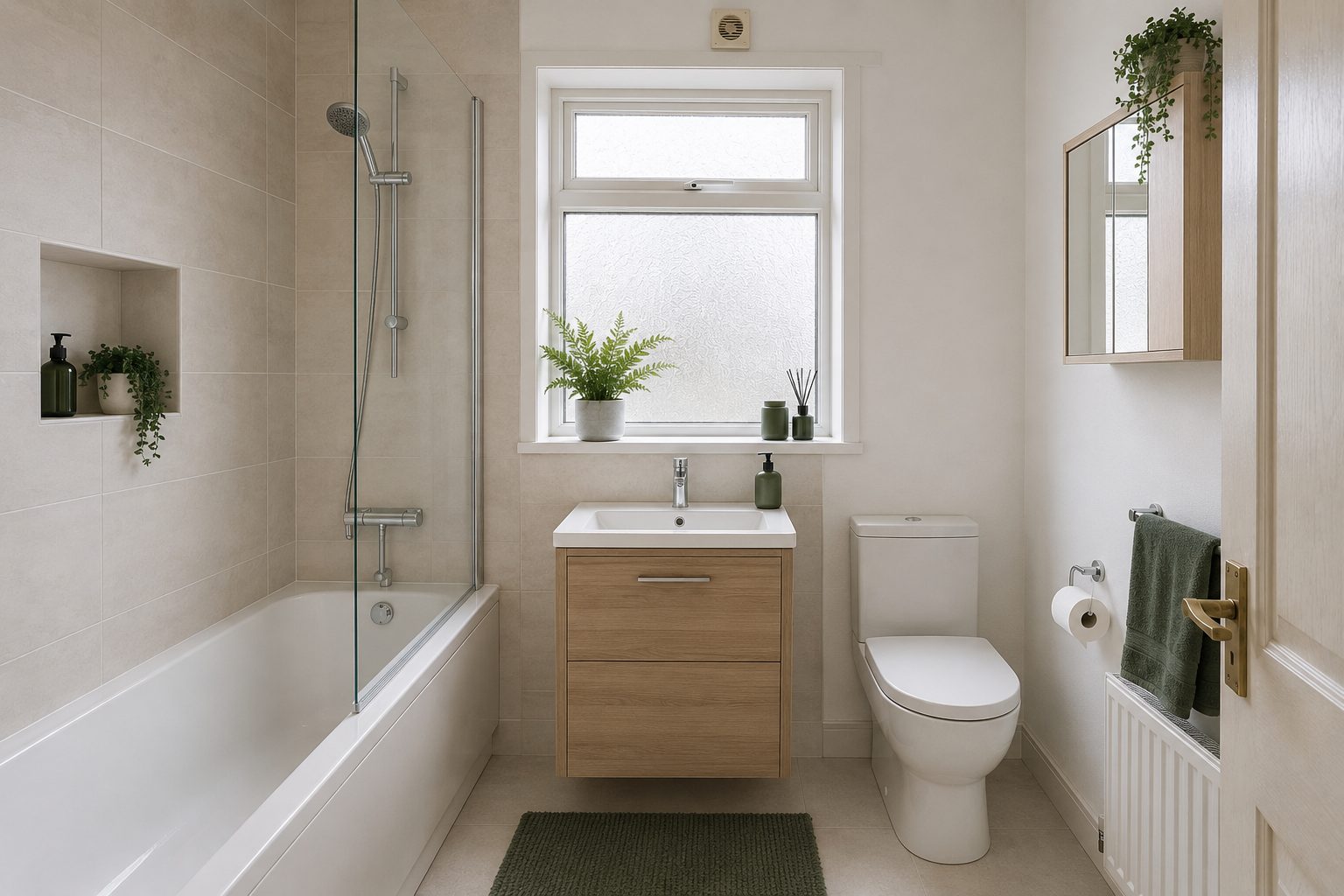
Keep the information for the products fitted
At handover, ask for the model details and care instructions for the bath, shower, screen, taps, furniture, wall finish and flooring. These products may have different maintenance requirements even when they form one coordinated room. Keep the information together with the quote. It is easier to find the right advice later when you know the exact range rather than only its colour or appearance.
Ask when the bathroom can first be used. Some materials and seals need time before receiving water or normal use, and the correct timing depends on the products and installation. Do not assume every part is ready simply because it looks finished. Check how the controls operate and how to recognise a problem while the installer is there to explain the room.
Use cleaning methods that suit each surface
Read the instructions before applying a familiar bathroom cleaner to new products. A method suitable for a ceramic basin may be unsuitable for a decorative tap finish, furniture edge or shower-screen coating. Stronger chemicals and rougher tools are not automatically better at removing a mark. Use the method recommended for the actual product, and ask the supplier if a stain is not covered by its guidance.
Follow cleaning-product safety directions and never mix chemicals. Be aware of spray reaching nearby fittings with different care requirements. Use clean cloths or tools suited to the surface rather than something carrying grit from another job. A regular, suitable routine is more useful than allowing heavy deposits to build up and then trying increasingly harsh methods that could damage the finish.
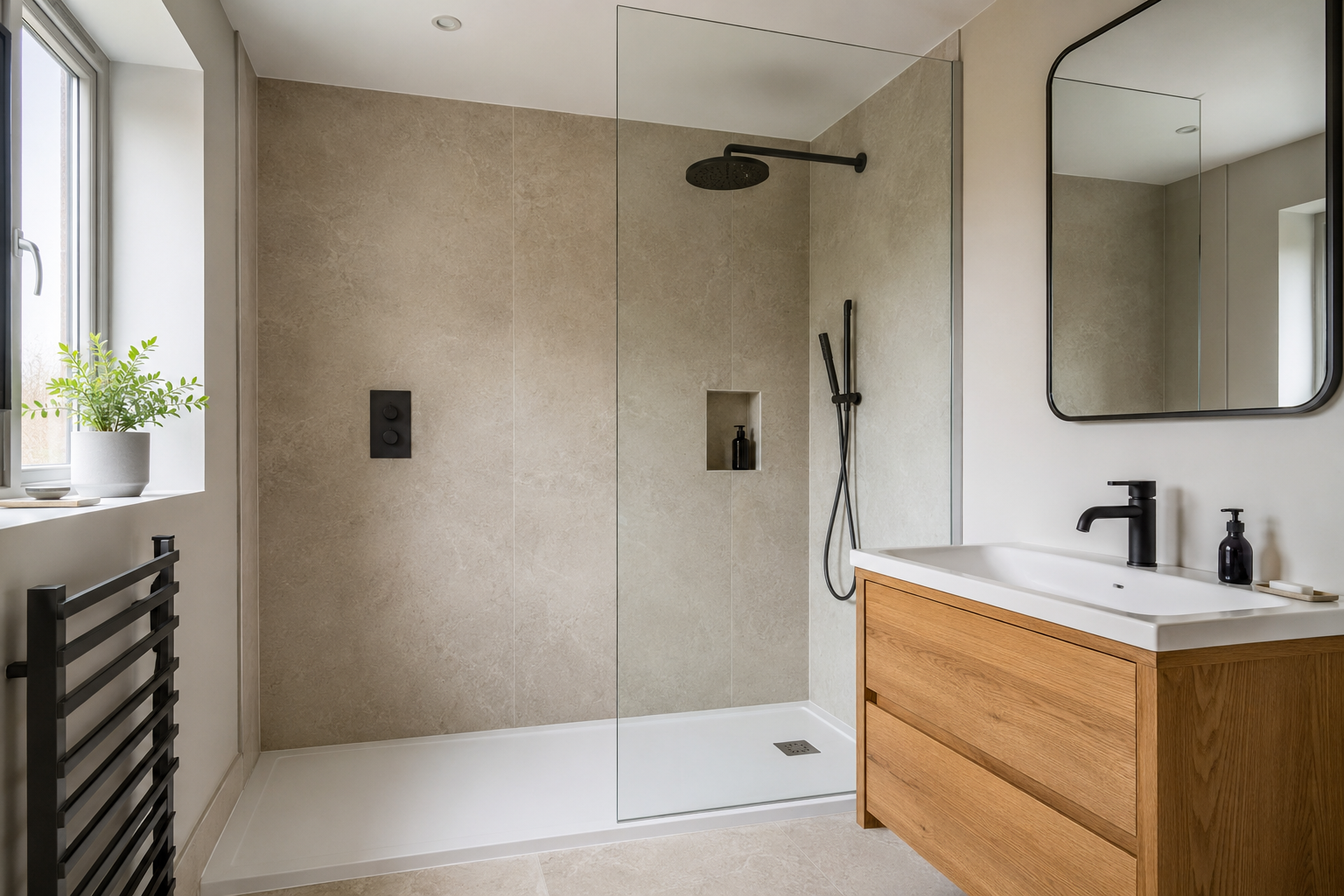
Give the screen, drain and storage regular attention
A shower screen includes seals, hinges, frames or tracks as well as glass. Check the instructions for reaching and cleaning those parts. Any coating may have its own restrictions, so it should not be treated as permission to use every cleaner or stop maintenance altogether. Keep the model details so a replacement seal or other part can be identified if needed.
Follow the drain's instructions for routine cleaning and keep its access clear. Bottles left around the tray can hide areas that need attention or block the route into the shower. Use the planned shelf or basket and keep it within comfortable reach. Basin drawers and cupboards also need checking for water around edges or pipes, with care based on the furniture instructions rather than assuming a bathroom cabinet can remain wet indefinitely.
Notice changes at joints and connections
Look for water escaping the bath or shower, a joint that has opened or a damp patch that keeps returning. Record when it happens and take photographs before asking for help. The visible mark may not identify the cause; a nearby fitting or connection could be involved. Report the problem rather than simply covering the area or adding more sealant without understanding what has changed.
Ask the appropriate installer or supplier about the required repair. Panels, tiles, trays and seals form different systems, and their replacement materials and methods should suit the original installation. Keep access to valves, drains and toilet cistern parts available. Furniture or decoration added later should not block the route needed for an ordinary check or repair of those fittings.
Use the ventilation as it was explained
Find out how the bathroom ventilation is intended to run and keep its instructions. Some equipment operates intermittently while other systems are designed to continue running. Do not switch an unfamiliar system off simply because it behaves differently from the previous fan. Ask for an explanation of the controls and any routine care that is appropriate for the installed equipment.
Keep intended vents clear and follow the manufacturer's cleaning and safe-switching instructions. Bathroom electrical repairs should be handled by a qualified electrician. Report recurring damp, unusual noise or unreliable operation rather than assuming a new fan cannot develop a problem. If moisture remains in the room, the complete ventilation arrangement or another cause may need checking instead of repeatedly cleaning the same affected surface.

Ask before adding accessories or changing fittings
A new shelf, rail or cabinet needs suitable support and a fixing method for the wall and finish. Check before drilling through panels or tiles, particularly in a shower area. Holes and joints may need treatment specified by the system. Seats and support rails should be chosen and fixed for the person's needs and the structure, rather than treated as ordinary decorative additions.
Keep a record of changes made after the original installation, including replacement parts. If an issue arises, provide the model information and a clear description of what is happening. Good bathroom care combines suitable cleaning, normal checks and prompt attention to faults. It should help you use the room confidently without relying on a general claim that new panels, coatings or fittings will never need maintenance.
Read about bathroom installation and handover for the fitting service. For more help with planning, see bathroom condensation checks and wall panels or tiles.