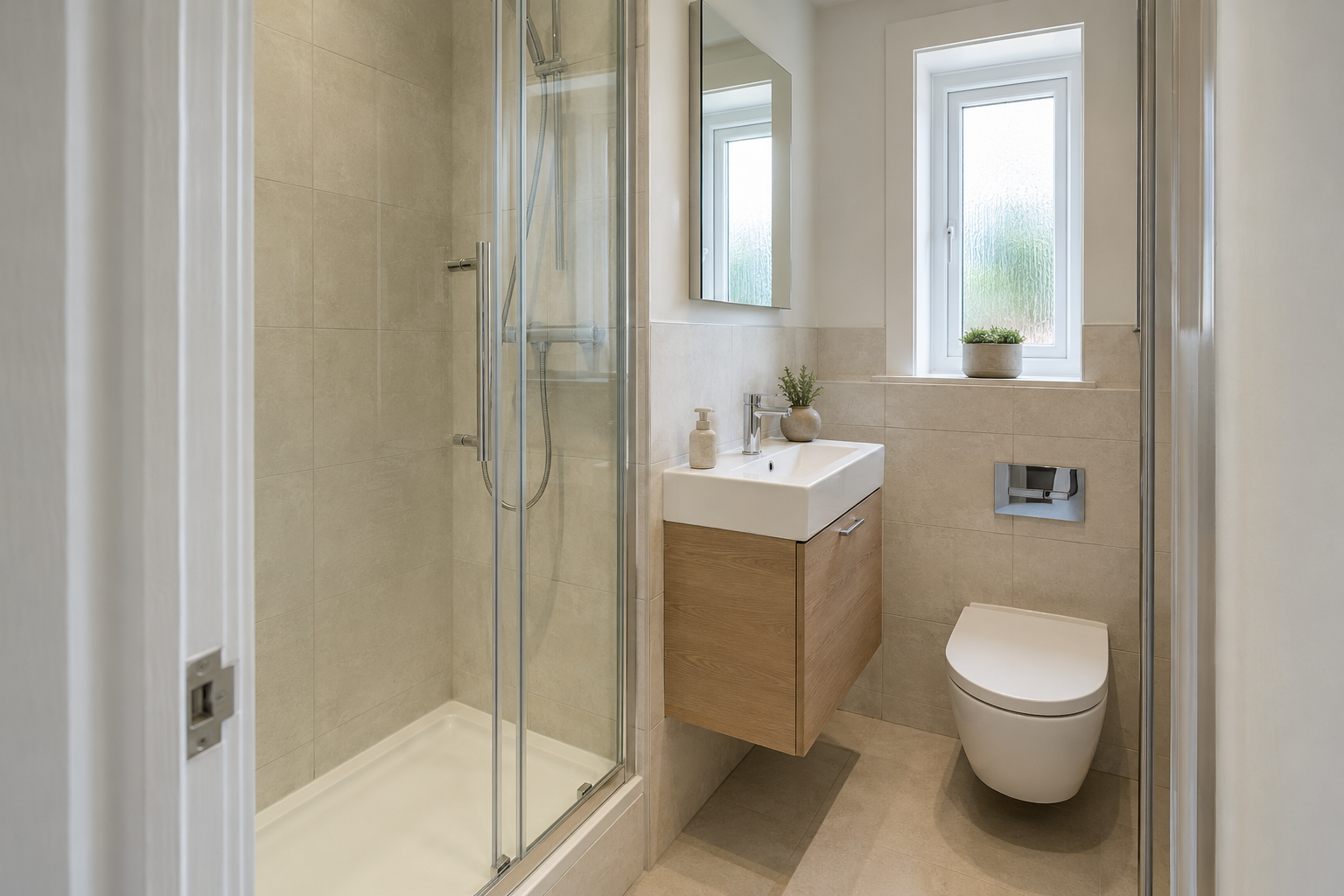
Notice when and where the moisture appears
A bathroom produces moisture during a bath or shower. Condensation can form when moist air meets a colder surface. A mirror that briefly mists during washing is different from a wall that remains wet or develops recurring marks. Note which areas are affected, when it happens and how long they take to dry. Photographs can help explain a problem that is not visible at the appointment.
Do not assume every damp patch is condensation. A leaking pipe, damaged seal or building problem may need a different repair. Keep a record of whether the mark follows shower use or appears at other times. This gives the person checking the bathroom useful information and helps avoid choosing a new wall covering before the cause of the damp has been understood.
Find out how your ventilation is meant to operate
Different homes use different ventilation arrangements. A bathroom fan may run intermittently, continue after a light is switched off or form part of a system designed to operate continuously. Read the instructions or ask the installer to explain the controls. Do not turn off an unfamiliar system simply because it runs longer than you expected; that may be part of its normal operation.
Keep intended vents clear and use the system as instructed. A window may also play a role, but its use should suit the ventilation arrangement rather than replace it without advice. If the home has a wider ventilation system, ask before changing openings or settings. General tips about a single extractor should not override the requirements of the equipment actually installed in your property.
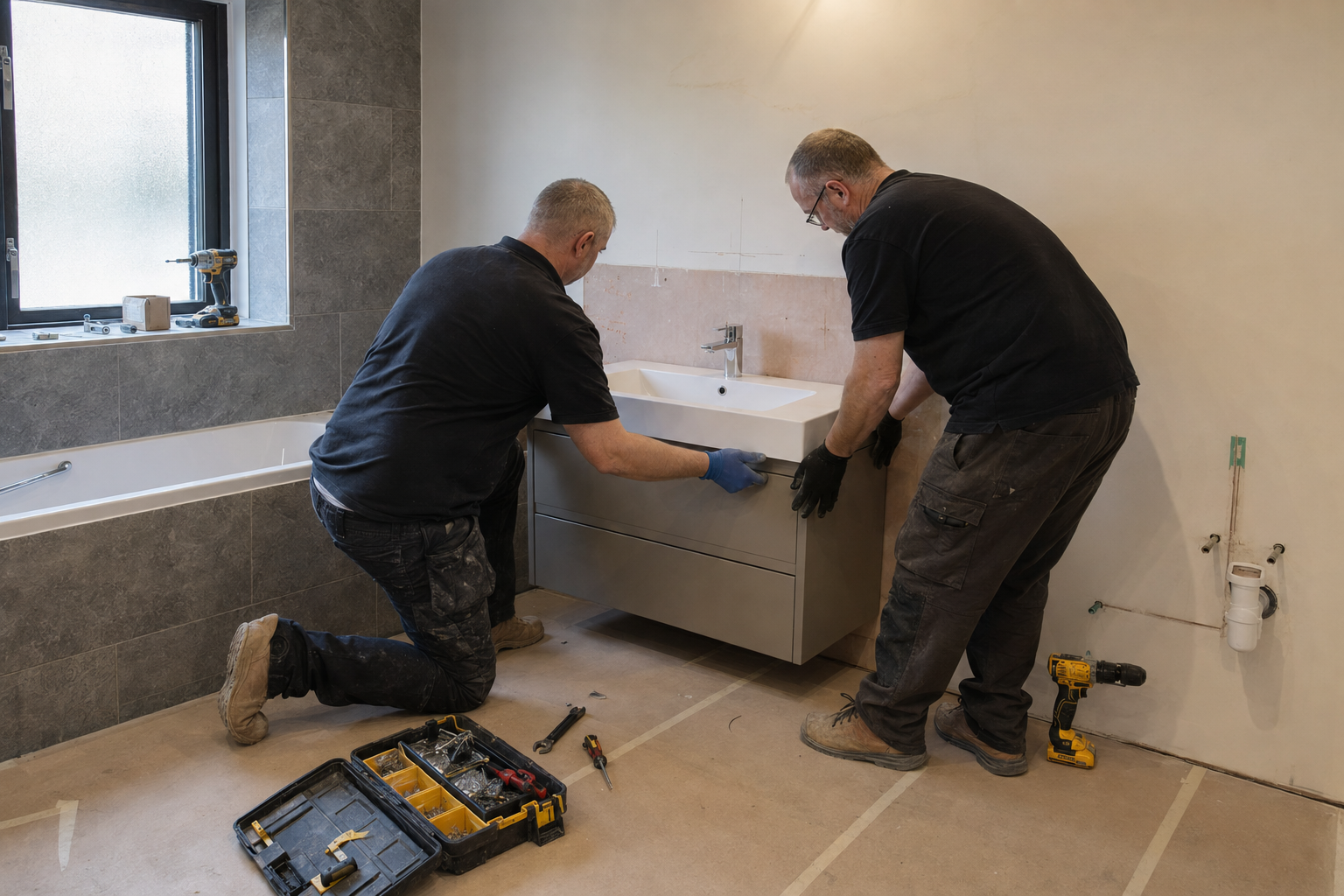
Ask for the fan and air route to be checked
A visible grille does not show the complete route used to remove damp air. Ask a suitable installer to check the fan, controls, ducting and outlet, together with how replacement air enters. Choosing a more powerful-looking fan without checking the rest of the arrangement may miss the cause. Explain noise or unreliable operation as well, especially if it discourages normal use of the equipment.
A qualified electrician should handle bathroom electrical work. Ask which products and positions are suitable and what work is required before buying a replacement. Keep the model information and instructions after fitting. You should understand the controls and any automatic operation, including what ordinary maintenance is expected and which parts require professional attention rather than opening electrical components yourself.
Include moisture problems in the renovation quote
If you are planning a bathroom refit, raise persistent condensation or damp during the first discussion. The work should address the cause alongside the new fittings. Ask which checks, repairs and ventilation changes are included in the quote. A vague line saying a fan is supplied does not explain whether the existing air route or recurring moisture problem has been assessed.
Changes elsewhere in the home can also affect ventilation. Discuss it with the relevant installer when windows, insulation or draught-proofing are being changed. Do not block a vent simply to make a new finish look more continuous. The bathroom plan should leave the equipment and its maintenance access usable, with responsibility for the necessary work clear before walls and ceilings are completed.
Follow cleaning instructions without hiding damage
Keep accessible ventilation parts clean according to the manufacturer's instructions, including how to switch equipment off safely where required. Do not remove electrical components beyond the stated routine care. Ask for help if the fan is damaged or behaving unusually. Cleaning the visible cover is different from assessing the complete system, so report persistent moisture even if the grille appears tidy.
Wall finishes, seals and furniture also need the care specified for their products. Report recurring mould, wet patches or damaged joints rather than continually painting or cleaning over the same area. Get suitable professional advice about the cause and safe treatment of recurring or extensive mould. Do not mix cleaning chemicals or assume that a stronger product will resolve a leak or ventilation fault beneath the visible surface.
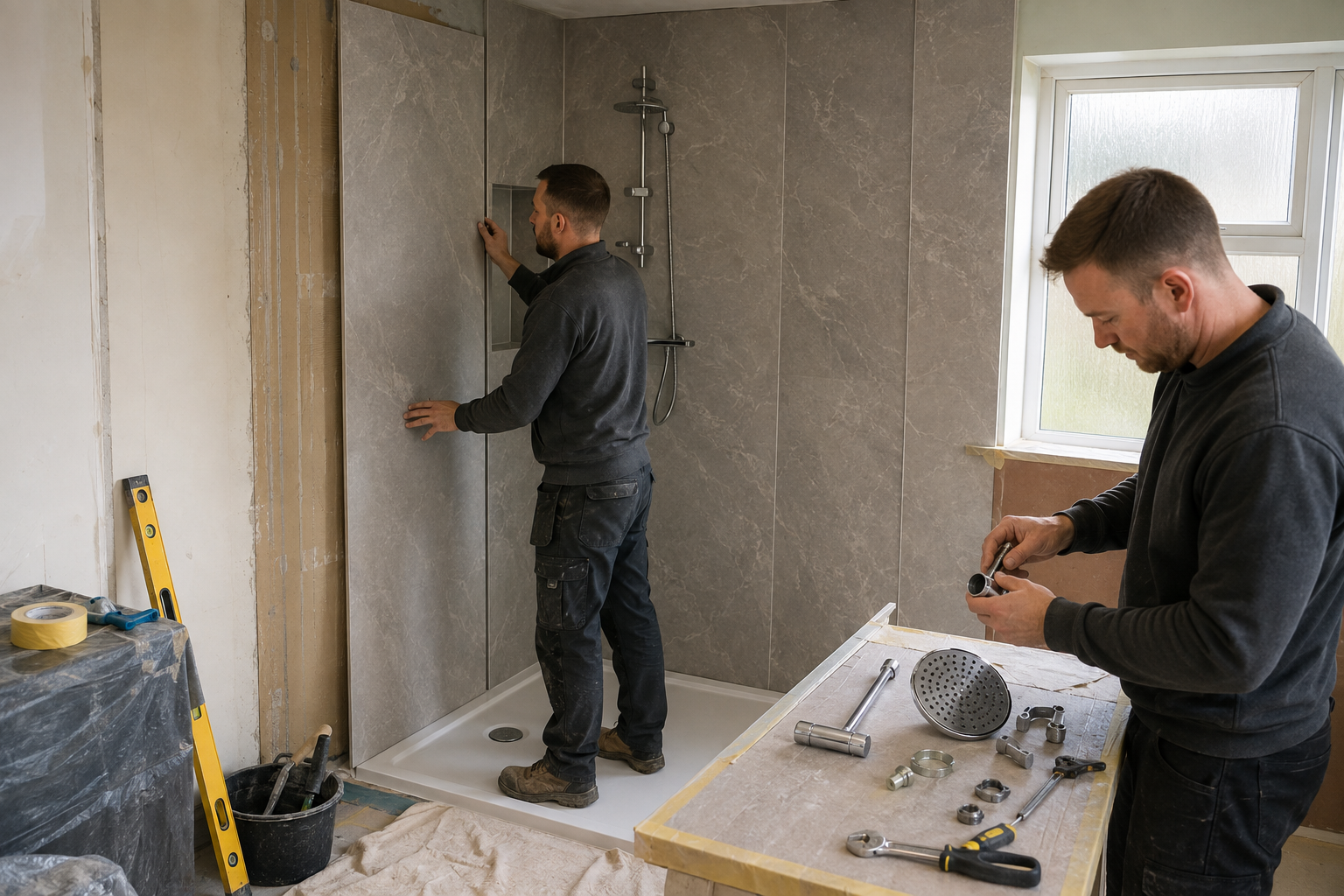
Keep records and check the result after the work
Save the description of the problem, photographs and agreed repairs. After the work, observe the bathroom during ordinary use and note whether the same areas stay wet or the marks return. Explain any continuing symptoms to the person responsible for the repair. A useful follow-up focuses on what is happening now and which part of the room remains affected.
If you rent, report persistent damp or faulty ventilation to your landlord or managing agent and retain the written record. If you own the property, seek advice from an appropriate building or ventilation professional. A new bathroom should not simply hide an old moisture problem. Include the repairs and ventilation work in your bathroom quote, and keep the care instructions so you know how to use and look after the equipment.
Read about bathroom renovation work for the fitting service. For more help with planning, see wall panels or tiles and caring for a newly fitted bathroom.